When Strategy Meets the Shop Floor: 5 Communication Failures That Derail Engineering Projects—and the Fixes That Actually Work
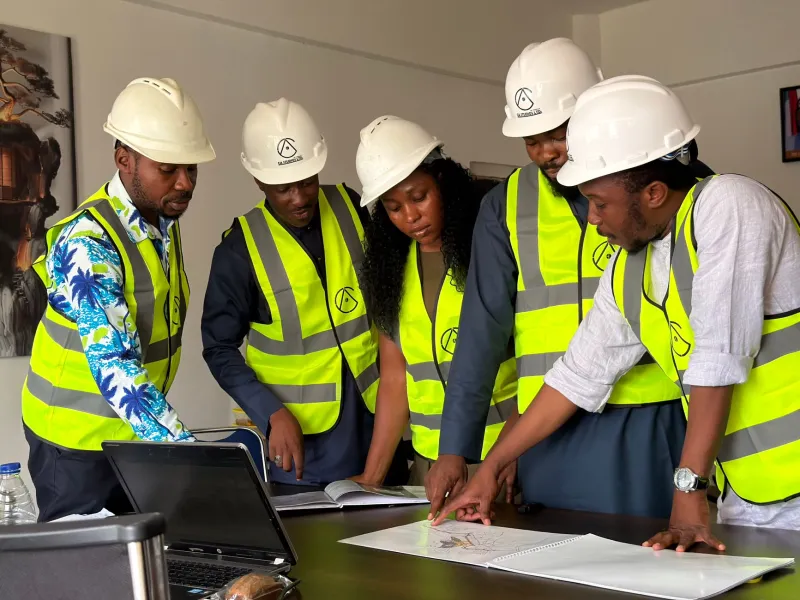
Ask any senior project manager at a large US industrial enterprise to identify the root cause of their most painful project failures, and the answer is rarely a technical one. It is almost never a materials shortage, a design flaw, or an equipment malfunction. More often than not, the answer involves people: specifically, the breakdown in communication between the individuals who define what a project is supposed to accomplish and the teams responsible for making it happen.
This is one of the most persistent and underacknowledged challenges in industrial project delivery. Engineering organizations invest heavily in technical competencies, project management methodologies, and capital planning—yet consistently underinvest in the organizational infrastructure required to keep complex, cross-functional initiatives aligned from initiation through commissioning.
The consequences are measurable. A 2022 study by the Project Management Institute found that organizations with poor communication practices experienced project failure rates more than twice as high as those with mature communication frameworks. In capital-intensive industrial environments, where a single delayed project can represent millions of dollars in lost production or deferred revenue, that disparity is not a minor operational inconvenience. It is a strategic liability.
What follows is a candid examination of five communication failures that appear with troubling regularity in industrial engineering projects—along with practical, implementable frameworks for addressing each one.
1. The Strategic Translation Gap: When Executive Vision Doesn't Survive the Handoff
The Breakdown
A capital project begins in the boardroom with a clear strategic rationale: increase throughput, reduce energy consumption, enter a new product segment. By the time that objective reaches the engineering team developing the project scope, it has often been filtered through multiple organizational layers, translated into technical language that strips out the strategic context, and reduced to a set of specifications that no longer carries the original intent.
The result is a technically compliant project that delivers the wrong outcome. Equipment is procured, systems are installed, and commissioning is completed—only for operations leadership to discover that the finished system does not actually solve the business problem it was meant to address.
Diagnostic Question: Can your project engineers articulate, in business terms, why this project is being executed and what success looks like from a P&L perspective?
The Fix
Implement a structured project charter process that requires executive sponsors to document strategic objectives in language accessible to technical teams. More importantly, require project engineers to restate those objectives in their own words as a condition of scope development approval. This bidirectional translation exercise surfaces misalignment early—when it is inexpensive to correct—rather than at commissioning, when it is not.
2. The Siloed Stakeholder Problem: Functional Departments Operating as Independent Nations
The Breakdown
In many industrial organizations, engineering, operations, maintenance, procurement, and finance function as largely autonomous departments with separate reporting structures, distinct performance metrics, and limited lateral communication. When a major project requires coordinated input from all of these functions—as most capital projects do—the absence of structured cross-functional engagement creates dangerous blind spots.
Operations teams discover late in the design phase that proposed equipment layouts conflict with established maintenance access requirements. Procurement makes sourcing decisions without adequate input from engineering on specification tolerances. Finance applies cost-reduction pressure to scope elements that engineering has identified as technically non-negotiable. Each of these failures is, at its core, a communication failure rooted in organizational silos.
Diagnostic Question: At what point in your project lifecycle does each functional stakeholder group formally engage with the project team—and is that early enough to influence decisions that affect their domain?
The Fix
Establish an integrated project team (IPT) structure that assigns a named representative from each functional stakeholder group at project initiation, not at the point when their input becomes urgent. Define the decision rights and escalation pathways for this team explicitly. Organizations that have adopted this model consistently report fewer late-stage scope revisions and reduced rework costs.
3. The Assumption Accumulation Effect: Undocumented Understandings That Become Project Risks
The Breakdown
Large engineering projects are built on hundreds of assumptions—about site conditions, utility availability, regulatory requirements, workforce capabilities, and vendor performance. In organizations with strong informal communication cultures, many of these assumptions are never formally documented. They exist as shared understandings among experienced team members who have worked together for years.
The problem emerges when personnel change, when project phases transition between teams, or when an assumption that everyone believed to be validated turns out to be incorrect. By that point, significant design or procurement work has been completed on a false premise, and the cost of correction is substantial.
A capital project at a large Gulf Coast petrochemical facility was delayed by seven months and incurred $4.2 million in additional costs when a site utility capacity assumption—one that had been verbally confirmed but never documented—proved to be inaccurate. The assumption had been carried forward through three project phase transitions without formal revalidation.
Diagnostic Question: Does your project team maintain a living assumptions log that is reviewed and revalidated at each project phase gate?
The Fix
Make the assumptions log a mandatory project artifact, reviewed at every phase gate and updated whenever project conditions change. Assign ownership for each assumption to a named individual responsible for its validation. This practice does not eliminate uncertainty, but it makes uncertainty visible and manageable rather than hidden and compounding.
4. The Progress Reporting Illusion: When Status Updates Obscure Rather Than Illuminate
The Breakdown
Most industrial organizations have well-established project reporting cadences: weekly status meetings, monthly executive dashboards, milestone tracking systems. The dysfunction arises not from the absence of reporting but from the nature of what gets reported.
Project status reporting in many organizations is structurally optimistic. Schedule variances are reported against revised baselines rather than original commitments. Cost overruns are attributed to scope changes that absorb accountability. Risk items that have been on the register for months are described as "being monitored" without any indication of whether mitigation actions are progressing. Leadership receives reports that suggest control while the project quietly drifts.
Diagnostic Question: When your project status reports indicate "on track," is that assessment made against the original approved baseline or against a series of revised baselines that have absorbed previous slippage?
The Fix
Adopt earned value management (EVM) principles—even in simplified form—to provide an objective, quantitative view of schedule and cost performance against the original baseline. Complement this with a formal early warning indicator system that flags developing issues before they become reportable variances. Equally important: create an organizational environment in which project teams feel safe surfacing problems early, without fear that doing so will be received as a failure of competence.
5. The Handover Cliff: When Project Teams and Operations Teams Fail to Transfer Knowledge
The Breakdown
The final and frequently most damaging communication failure occurs at the transition between project completion and operational startup. Engineering and project teams, under pressure to close out and move on, compress or abbreviate the knowledge transfer process. Operations and maintenance personnel who will be responsible for running and sustaining the new system receive inadequate training, incomplete documentation, and insufficient time to develop operational familiarity before the project team dissolves.
The result is a system that performs well during commissioning—when project engineers are still present—and then underperforms or fails to reach design throughput once operations assumes full responsibility. The gap between demonstrated capability and sustained performance is almost always a knowledge transfer problem.
Diagnostic Question: At what point does your operations team become actively involved in the project—and is that involvement substantive enough to prepare them to own the system at handover?
The Fix
Begin operations integration at the detailed design phase, not at commissioning. Assign operations and maintenance personnel as active participants in factory acceptance testing and pre-commissioning activities. Require that operating procedures, maintenance protocols, and system documentation be completed and validated before mechanical completion is declared. Define a formal operational readiness review as a mandatory project milestone with its own acceptance criteria.
The Organizational Dimension of Engineering Excellence
The five failure patterns described above share a common thread: they are organizational problems, not technical ones. They cannot be solved by better software, more sophisticated project management tools, or additional engineering resources. They require deliberate attention to how information flows across organizational boundaries, how accountability is structured, and how leadership creates the conditions for honest, timely communication.
For industrial enterprises committed to delivering complex engineering projects reliably, the investment in organizational communication infrastructure is not a soft skill initiative. It is a hard financial imperative—one that determines whether the technical capabilities an organization has built actually translate into operational outcomes that drive the business forward.
