Where Drawings Meet the Shop Floor: Fixing the Engineering-to-Manufacturing Handoff Before It Becomes a Costly Breakdown
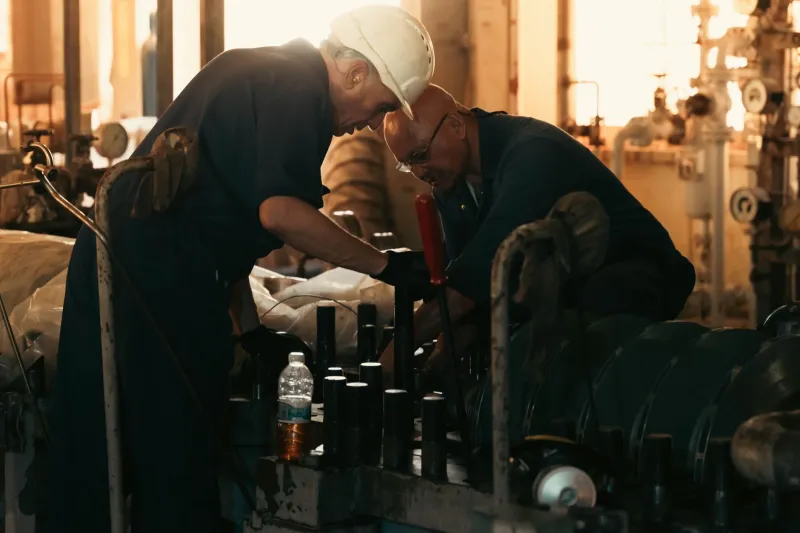
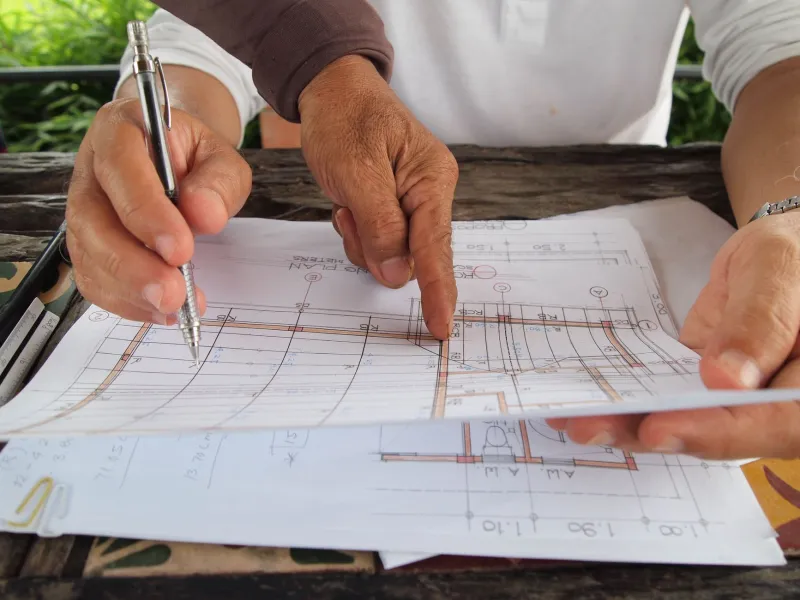
There is a moment in nearly every industrial project when a set of engineering drawings—carefully developed, internally reviewed, and formally approved—arrives on the shop floor and promptly encounters reality. Tolerances that seemed perfectly reasonable on screen reveal themselves to be unachievable with available tooling. Assembly sequences that flowed logically in a CAD model require contortions that no technician can reasonably perform. Materials specified without consultation turn out to have lead times that blow the schedule entirely.
This is the engineering-to-manufacturing handoff. And in US industrial operations, it remains one of the most expensive, most preventable, and least formally managed transitions in the entire project lifecycle.
The Hidden Cost Sitting Between Two Departments
Most organizations track project cost overruns and schedule delays with reasonable fidelity. Fewer organizations accurately attribute those overruns to their actual source. When a manufacturing team requests a design revision three weeks into production, the cost gets logged against the project. What rarely gets logged is the root cause: an engineering-to-manufacturing disconnect that could have been identified and resolved months earlier at a fraction of the expense.
Industry research consistently places the cost of late-stage design changes at five to ten times the expense of equivalent changes made during the design phase. For complex industrial projects—capital equipment builds, custom automation systems, process plant fabrications—this multiplier translates to six- and seven-figure consequences. More damaging still, repeated handoff failures erode the working trust between engineering and manufacturing teams, creating organizational friction that outlasts any individual project.
The financial exposure is compounded by schedule compression. When manufacturing teams discover specification gaps or design conflicts after production has commenced, they face an uncomfortable choice: stop work and await engineering clarification, or proceed under assumptions and risk producing nonconforming components. Both options are costly. The first delays delivery. The second risks scrapped material, warranty exposure, and customer dissatisfaction.
Three Root Causes That Explain Most Failures
Handoff failures are rarely the result of negligence. More often, they stem from structural gaps that organizations have simply never addressed systematically.
Incomplete or context-free specifications. Engineering documentation frequently conveys the what of a design without adequately conveying the why. When a manufacturing technician encounters a dimensional tolerance or a material callout without understanding the functional intent behind it, any ambiguity gets resolved through assumption rather than knowledge. That assumption may be reasonable. It may also be wrong. Specifications that carry contextual notes—explaining why a tolerance is critical, or what performance outcome a material selection is intended to achieve—give manufacturing teams the information they need to make sound decisions when the unexpected arises.
Late or absent operator input during design. Engineering teams operating in isolation from manufacturing produce designs optimized for theoretical performance rather than practical producibility. This is not an indictment of engineering competence; it is a structural consequence of how most organizations sequence their workflows. When manufacturing engineers, tooling specialists, and experienced floor operators are brought into design reviews late—or not at all—the opportunity to surface producibility concerns before they become production problems is lost. The shop floor holds institutional knowledge that no design software can replicate. Failing to access that knowledge during design is an organizational choice with measurable financial consequences.
Undefined handoff protocols. In many industrial organizations, the engineering-to-manufacturing transition is treated as a document transfer rather than a managed process. Engineering issues a release package; manufacturing receives it. What happens next—who reviews it, what questions get asked, what gaps get escalated, and by what timeline—is often left entirely to informal convention. Without a defined protocol, critical issues surface based on who happens to notice them rather than through systematic review. This is an unreliable quality gate.
What a Structured Transition Framework Looks Like
Organizations that manage engineering-to-manufacturing handoffs effectively share several common practices. These are not theoretical constructs; they are operational disciplines that translate directly into reduced rework, improved schedule adherence, and stronger cross-functional alignment.
Concurrent engineering participation. Rather than treating manufacturing as a downstream recipient of engineering output, leading organizations integrate manufacturing representation into design development from the outset. This does not require manufacturing engineers to attend every design meeting. It does require structured touchpoints at defined design milestones—concept review, preliminary design review, critical design review—where manufacturing perspectives are formally solicited and documented. Issues identified at these stages cost a fraction of what they cost to resolve in production.
Producibility reviews as a formal gate. Before any design package is released for manufacturing, it should pass through a dedicated producibility review conducted by manufacturing engineers with direct knowledge of available equipment, tooling, and workforce capabilities. This review is not a rubber stamp. It is a structured assessment of whether the design as documented can be produced as intended, within budget, on schedule, and to specification. Any gaps identified at this stage should be resolved through documented engineering responses before the release is finalized.
Contextual documentation standards. Engineering organizations should establish documentation standards that require specification context alongside specification values. A drawing note that reads "tolerance critical for sealing function" gives manufacturing teams actionable guidance that a bare tolerance callout cannot. This practice costs relatively little in engineering time and returns significant value in manufacturing decision quality.
Defined escalation and communication channels. When manufacturing teams encounter questions or discrepancies during production, there must be a clear, fast path to engineering clarification. Organizations that rely on informal communication—emails that get buried, verbal conversations that go undocumented—accumulate ambiguity debt that eventually surfaces as nonconformances or rework. A defined escalation protocol, with assigned engineering contacts and expected response timeframes, reduces the cost of uncertainty significantly.
Post-handoff retrospectives. The best organizations treat each manufacturing handoff as a learning opportunity. A structured retrospective—conducted after initial production runs, not after project closeout—captures what worked, what didn't, and what systemic changes would improve the next transition. This practice builds organizational memory that makes each subsequent handoff more effective than the last.
The Organizational Dimension
It is worth acknowledging that handoff failures are not purely process problems. They frequently reflect cultural dynamics between engineering and manufacturing functions that have calcified over years or decades. Engineering teams may view manufacturing input as a constraint on design freedom. Manufacturing teams may view engineering documentation as impractical or out of touch. These perceptions, left unaddressed, undermine even well-designed transition protocols.
Leadership plays a decisive role here. When executives and project directors treat engineering-to-manufacturing alignment as a shared organizational priority—rather than a problem for either department to solve independently—the cultural conditions for effective handoffs begin to take shape. Cross-functional accountability, shared project metrics, and joint success criteria create incentives for collaboration that process documentation alone cannot generate.
Closing the Gap Before It Opens
The engineering-to-manufacturing handoff will never be frictionless. The complexity of industrial design, the variability of shop floor conditions, and the inherent limits of documentation ensure that some degree of translation loss will always occur. The goal is not perfection; it is systematic reduction of preventable failures.
Organizations that invest in structured handoff protocols, concurrent engineering participation, and cross-functional communication infrastructure consistently outperform those that treat the transition as an administrative formality. The financial case is clear. The operational case is equally compelling. What remains is the organizational will to treat this critical juncture with the rigor it deserves—before the drawings arrive on the shop floor and the clock starts running.